
Key takeaways: Issues that impact the need for food banks like quality employment, income supports, and housing affordability are affected by legislation at all levels of government, but several local challenges will require provincial solutions.
How can we address the growing need for food banks in Ontario? While no organization, community, or level of government can solve the root causes of hunger alone, coordinated policy action across municipal, provincial, and federal governments can make a meaningful difference.
As new and returning mayors and city councilors take office after the recent municipal elections, communities have an opportunity to champion the changes needed to reduce the need for food banks.
Learning more about the roles and responsibilities of each level of government is an important part of understanding how they can work together to create change.
How decisions at different levels of government impact the need for food banks
Food banks are working hard to provide support to people and families facing hunger, but they were not designed as solutions to food insecurity or poverty. These challenges can only be addressed by public policies that ensure everyone has the income they need to afford food, housing, and their basic necessities.
Issues that impact the need for food banks like quality employment, income supports, and housing affordability are affected by legislation at all levels of government.
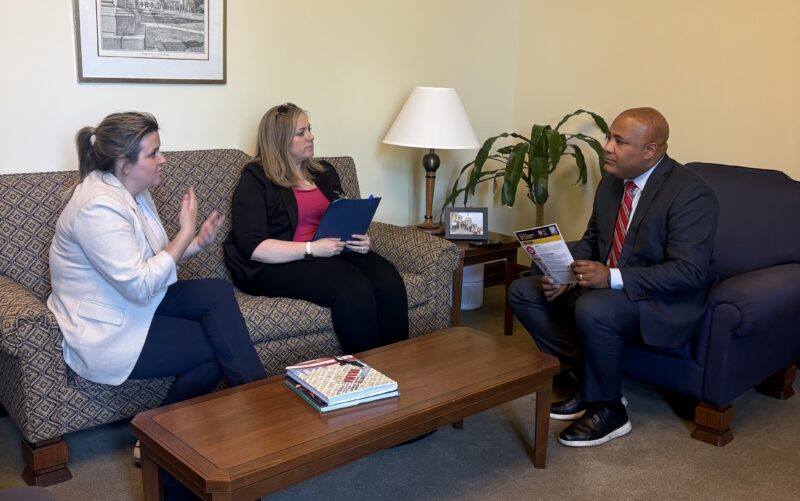
The Feed Ontario team meets with elected representatives at all levels of government to discuss solutions to hunger and poverty.
Income supports
When people can’t earn enough to cover basic needs, income support programs help fill the gap.
The federal government delivers programs like the Canada Child Benefit, Old Age Security, the Canada Disability Benefit, and Employment Insurance, while the provincial government oversees Ontario Works and the Ontario Disability Support Program (ODSP), including benefit rates and eligibility. Municipal governments deliver Ontario Works locally and connect residents to employment and other community supports.
When these income supports don’t keep pace with the cost of living, people are left with less money for food after paying for essentials like housing, utilities, and transportation. As a result, more households turn to food banks for help.
Housing
Housing costs are often a person or family’s largest expense, and unaffordable housing is one of the main reasons someone may need to turn to our network for support. Nearly 1 in 3 of food bank visitors shared that the cost of housing was the reason for their visit in the last year.
The federal government is responsible for funding national housing programs, investments, and setting affordability strategies and initiatives. Provincially, governments make decisions on housing legislation and policy, establish funding programs, and work with municipalities to increase housing supply and affordability. The municipal government approves new developments, oversees land use and zoning, and is the primary funder and manager of social housing programs.
As housing costs rise, and more income goes toward rent or mortgages, a growing number of households need to turn to food banks to fill the gap.
Employment supports
The unfortunate reality is that having a job no longer protects people from facing food insecurity. Low wages, precarious employment, or job loss can quickly leave a household struggling to afford food.
Federally, the government manages Employment Insurance, sets standards for federally-regulated industries, oversees work permits and programs. The provincial government is responsible for setting employment standards, labour laws, and the minimum wage, and for funding employment services and training programs. Municipalities throughout Ontario support local economic development and employment services and initiatives through community workforce programs.
As part-time roles and gig work have become larger parts of the workforce in the province, more people are stretching low wages and lack access to stable employment. This often leads to people and families needing the support of a food bank just to get by.
Local challenges will require provincial solutions
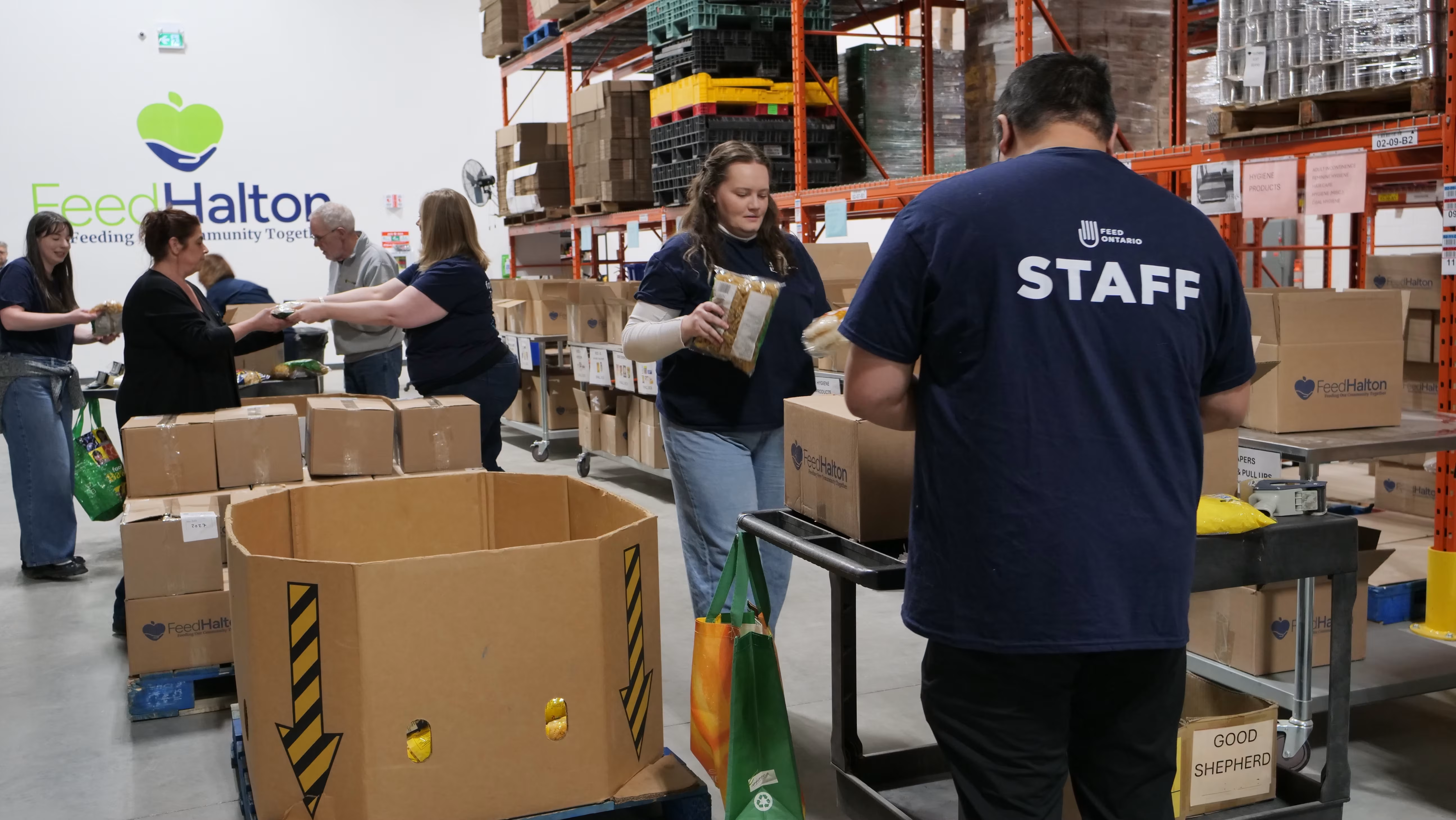
Though food banks are working hard to meet the need they’re seeing in their communities, they are not a long-term solution to poverty.
Though municipalities have a key role to play in addressing the root causes of poverty, they can’t end hunger alone.
While municipal governments are responsible for implementing many of the initiatives that impact our day-to-day lives, policies at the provincial level related to housing, employment, and income supports often shape the reasons people and families need to turn to food banks.
Practical policy solutions at the provincial level, like updating Ontario Works rules to allow those with jobs to keep more of the income they earn, will mean fewer people will need the support of a food bank. Municipalities can be key partners in advocating for these changes as they work to address poverty in their own communities.
Together, we can build communities where everyone can thrive
With a coordinated response, our elected officials can help communities across the province address hunger and poverty, but we all have a role to play in making a difference to support those in need.
To get involved, you can learn more about how decisions at all levels of government impact the need for food banks, find out how hunger affects your community, and sign our petition to tell the Province it’s time to make ending hunger a priority.