More people than ever before are being hurt by hunger in Ontario. Food banks are working as hard and tirelessly as they can to help those in need in their communities, but they’re being pushed to their breaking point.
In the Hunger Report 2025, we shared that the number of people who need to turn to food banks for help has hit another record high, increasing for the ninth year in a row.
But what’s even more worrying is that the number of times each person visited a food bank is growing at a much higher rate. Before the pandemic, on average, people and families turned to food banks about 6 times per year. Today, they need to visit 9 times per year just to get by.
Ontarians hurt by hunger need more support than ever before
This means, not only do more people than ever before need help, but the amount of support they need is rising as well.
Things are getting harder for those in need as the affordability crisis pushes people and families who were “just getting by” to “barely holding on.” Those who were already struggling to make ends meet are worse off than before, as the cost of living continues to rise, and inadequate incomes and social supports stay the same.
The dollars families were once able to stretch to make it through the month don’t reach the end anymore, leaving them with little or nothing left over once rent and other bills are paid. Now, those who once turned to a food bank only occasionally to get by need to turn to their community for help more consistently, each and every month.
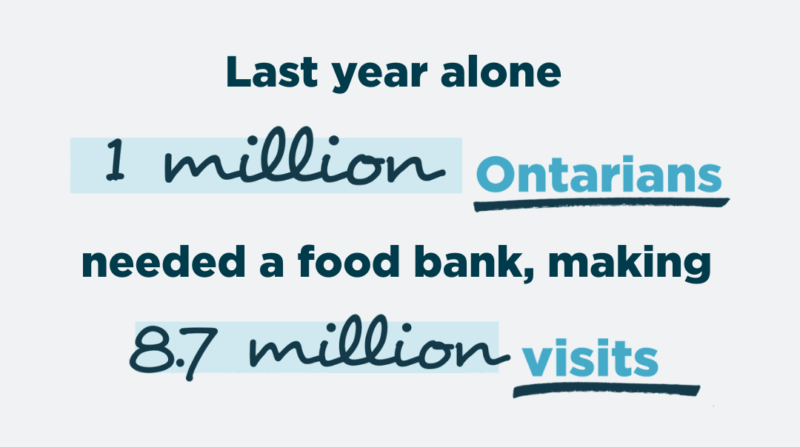
On average, food bank visitors accessed services 9 times per year in 2024-2025.
What does the growing need for support mean for food banks?
The rise in the number of visits is having a concerning impact on food banks in Ontario. The need for help is, in many cases, exceeding the resources that food banks have available to them.
As more people need to access their services more often, food banks are looking for ways to stretch their already stretched resources. Unfortunately, this means almost 40% of food banks in the province have been forced to reduce the amount of food they can provide to each visitor, to ensure they can support all those seeking their help.
This also means that the increasing number of visits per person is likely underrepresented. As the need in the province has grown, many food banks have had to reduced the amount of times a person can visit to try to make sure they can help the additional people in need that are coming through their doors.
To continue providing the food their communities rely on food banks are finding new, innovative ways to collaborate with partners and other food banks to source and share the food they need. But even so, many in our network have had to prioritize food assistance, reducing their hours or making cuts to the other important programs they offer, like resume-building or job search supports.
Hunger hurts. You can help.
Despite the challenges Ontario is facing and the affordability crisis pushing more people and families to seek help from food banks, we believe ending hunger is possible.
You can help us make this a reality. To support the children, seniors, people, and families in Ontario hurt by hunger, you can:
- Support our work keeping food bank shelves stocked for those most in need.
- Add your voice to our petition calling on the Province to make ending hunger a priority, so all our communities can thrive.
- Lend a hand to your neighbours in need by volunteering at your local food bank.
Together, we can make sure everyone has access to the healthy food they need today, while working toward a future where no one needs a food bank in the first place.