Who is using food banks

For the 9th consecutive year, food bank use has risen as more Ontarians move from “just getting by” to “barely holding on.” Though the number of people that need to turn to a food bank grew by 1%, the sharp growth in the number of visits each person made tells us that circumstances are worsening for those facing hunger and people turning to food banks need more support just to get by than before.
Hunger reaches every corner of Ontario, with each region seeing double-digit per cent increases in food bank use over the last year. Food banks are working tirelessly to help their communities, but the need is outpacing the resources available and food banks are being stretch past their limits.

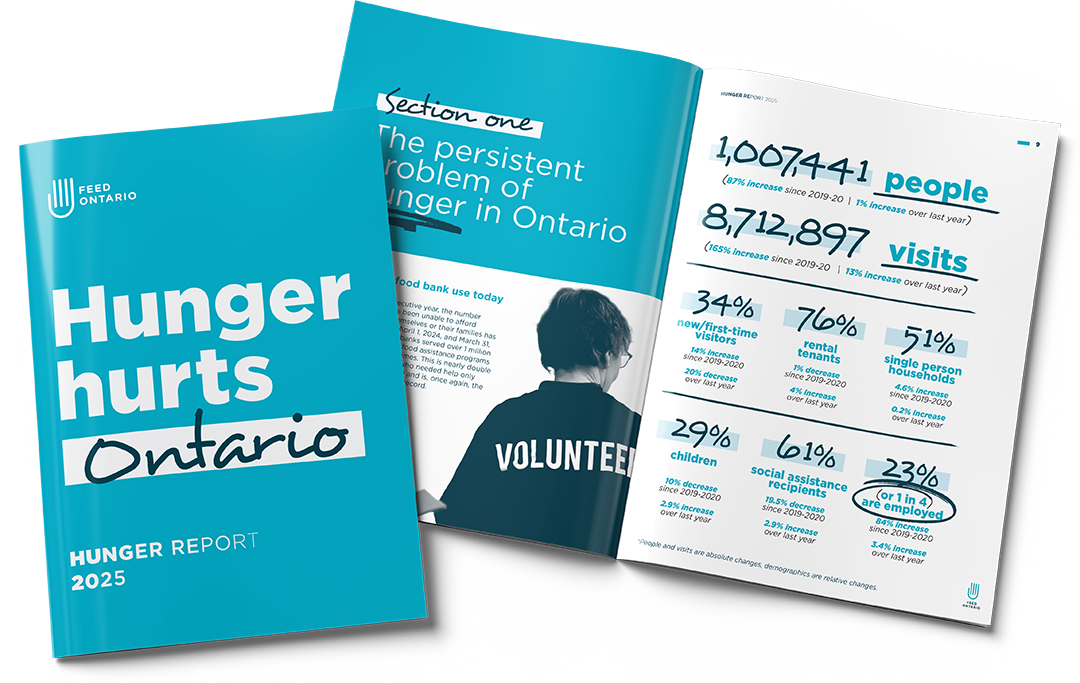
unique individuals visited a food bank last year.
+87% increase since 2019-2020
+1% increase over last year

total visits to Ontario's food banks last year.
+165% increase since 2019-2020
+13% increase over last year
new/first-time visitors
rental tenants
single-person households
children
(or 1 in 4)
are employed
Double digit increases in every corner of the province
Every region in Ontario has seen double digit increases in food bank use over the year.

Note: Year over year changes in unique visitors and visits, by region. Caution should be used when interpreting regional differences in visit data, as there is a wide variety of service models amongst food banks that impact the number of times a household can visit per month.
What causes hunger?
The persistent problem of hunger in Ontario is caused by poverty. As the affordability crisis continues and the cost of essentials, like housing, continues to rise, incomes and social supports have not kept pace and more people are struggling to make it to the end of the month.
For many people and families, not having enough income to afford basic necessities leads to a progressive loss of choices as the gap between income and expenses widens. Food banks are often a last resort when someone needs support. They may first downsize their home, take out a loan, or ask friends and family for help before ultimately accessing emergency food assistance.
Our impact
As Ontario's largest collective of hunger-relief organizations, we work with food banks, industry partners, and local communities to provide healthy food to those who need it today, while helping make sure food banks have the knowledge, skills, and capacity to keep up with increasing demand.
But food banks were never intended to be a long-term solution to hunger and poverty. That’s why we’re driving change through poverty-reduction research and advocacy in hope that one day food banks won’t be needed.

pounds of fresh and non-perishable foods are distributed by Feed Ontario each year to those who need it most.

in funding provided to support food bank infrastructure through the Feeding Possibility! grant.

food banks and hunger-relief organizations are supported across the province.
CREATING IMPACT
How We Feed Ontario
Feed Ontario represents a network of more than 1,200 food banks and hunger-relief organizations across Ontario. Through our network, we deliver millions of pounds of food across Ontario, serving more than 1 million people each year. While we work to strengthen and grow the capacity of the provincial food bank network, Feed Ontario continues to advocate for evidence-based programs and solutions to make ending hunger and poverty a priority in our province, to realize our vision of an Ontario where everyone is food secure.
We make an impact in three ways:
FeedON
We are distributing food to food banks across Ontario.
Feed Ontario's food programs work in partnership with Ontario's agricultural, food, and grocery sectors to ensure food banks are stocked with the fresh, healthy food they need to support their communities. Last year, we distributed over 10 million pounds of food to help 1,200 hunger-relief organizations provide food to more than 1 million Ontarians.
Hunger hurts Ontario
Food banks are playing an essential role in communities and in Ontario. Without their service, more children, adults and seniors would go hungry, more families would lose their homes, and more people would not be able to access the healthcare they need. Food banks are actively preventing some of the Province’s biggest challenges from getting worse, including homelessness, strain on the healthcare system, and instability in our communities. Read more in our 2025 Hunger Report.
Set the table for tomorrow
There are steps everyone can take to fight hunger in Ontario, and every action makes a difference. You can get involved today by joining us to advocate for change, volunteering at your local food bank, or making a donation to help us keep food bank shelves stocked for those facing hunger.