
By Kate Williams
As a nutrition student at the University of Guelph, I have learned firsthand how important nutrition is for health.
Over the past summer, I have worked as a fundraising and marketing coordinator at FeedHalton, an organization that serves as the regional food procurement and distribution hub for Halton. FeedHalton is a member of Feed Ontario and provides essential support to its network of food banks, community organizations, and meal programs across the Halton region. This helps these organizations better serve their communities and continue to support those in need.
Although I was not directly involved in distributing food as part of my role, I saw how the behind-the-scenes work helps build partnerships, foster community collaboration, and raise awareness about food insecurity in Halton.
Working at FeedHalton has truly changed how I think about nutrition and my future as a dietitian.
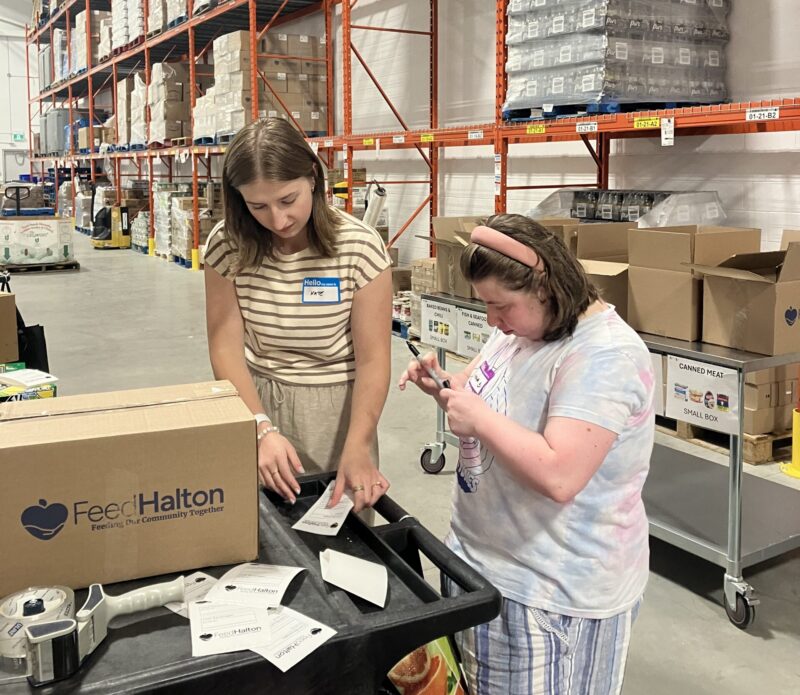
Kate helping to sort, package, and label boxes of food that will be distributed to FeedHalton’s network.
Connecting my FeedHalton experience to my nutrition studies: how food banks are working to provide healthy options for everyone in need
Food insecurity(opens in new tab) is when people aren’t able to afford enough nutritious food, or worry about running out of or being unable to buy healthy food. This can happen for many reasons, including living on a low income, needing to rely on social assistance programs that haven’t kept pace with the cost of living, like the Ontario Disability Support Program, or high housing and grocery costs.
Across the province, the need for food banks has continued to grow, and FeedHalton is seeing this too. In Halton, food bank visits have increased by 25% from 2023-2024.
FeedHalton was created to help address this growing need through centralizing distribution. They collect, sort, store, and deliver food to their agency network. This strengthens the region’s food system by ensuring a coordinated and reliable flow of food support.
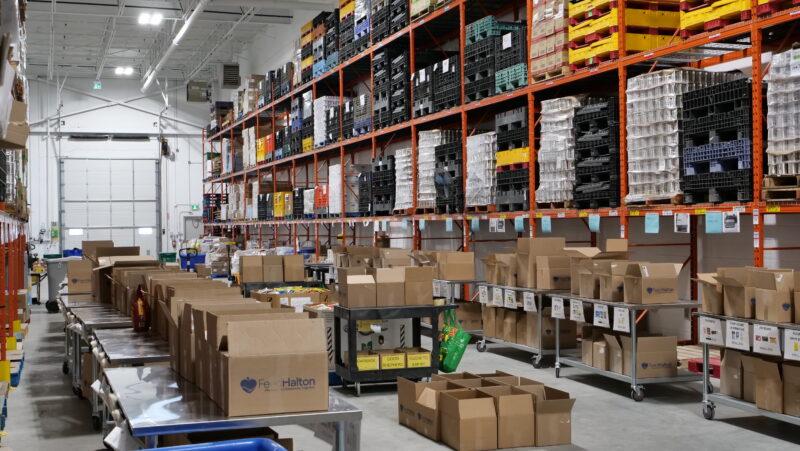
At FeedHalton, large-scale food shipments from Feed Ontario and corporate partners are processed and shared with local food banks in the area.
Food banks are supporting nutrition
FeedHalton supplies nutritious foods to its partners through large-scale corporate donations and its membership with Feed Ontario. Feed Ontario provides access to meat, poultry, eggs, milk, and fresh produce, which helps FeedHalton’s partner agencies offer a wide range of nutritious foods to the communities they serve. Making sure people in need have regular access to nutritious foods reduces the risk of long-term diseases and supports growth, development, and mental health.
Food banks also recognize that people have individual dietary needs. Many provide halal, kosher, gluten-free, vegetarian, vegan, and lactose-free food options. Numerous factors influence our food choices. This includes access to a kitchen or refrigerator, income, food knowledge, health, and where someone lives. Food banks work to address these factors by offering shelf-stable, easy-to-prepare foods and considering people’s unique situations.
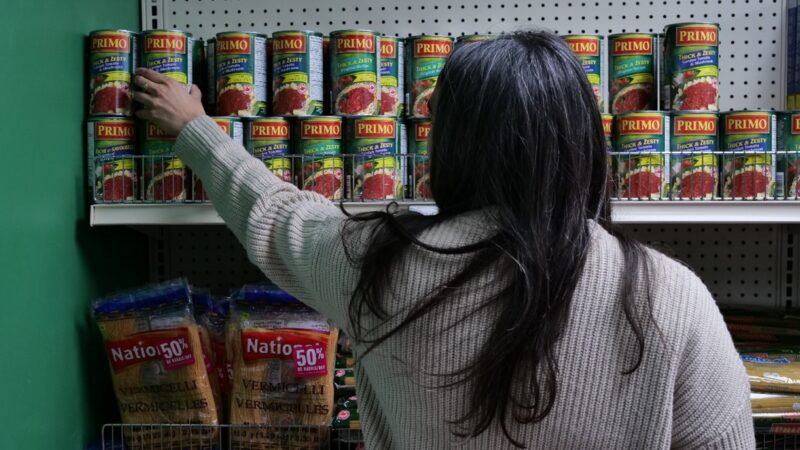
Many food banks operate grocery store models that allow visitors more choice.
Food assistance is not just about what food is given but also how it is provided. Many food banks use a grocery store model, which allows people to choose foods that meet their personal, cultural, religious, and health needs. This approach offers people more choice, helps them feel more in control, and can help to support a sense of confidence in preparing their food.
Understanding the unique factors that influence food choices will help to inform the future nutrition recommendations that I make. For instance, recommending healthy options that are suitable for all income levels, like frozen vegetables or canned vegetables and protein sources, for those who may not always be able to afford fresh produce or proteins.
The role of food banks in supporting nutrition and food security: working toward long-term solutions
Working at FeedHalton showed me that food insecurity cannot be solved by food support alone. While food support is important, long-term solutions require advocacy, policy change, income supports, and community collaboration.
Through my nutrition studies, I am learning that government policies help shape our food systems. This past year, I had the opportunity to write a letter to the Minister of Agriculture and Agri-Food about improving access to fresh produce for low-income Canadians, as well as an opinion piece supporting FeedHalton. This summer, I also took part in MP visits at FeedHalton. These experiences deepened my understanding of how advocacy can create change. They also showed me that nutrition professionals have an important role in advocating for policies that increase access to nutritious foods.
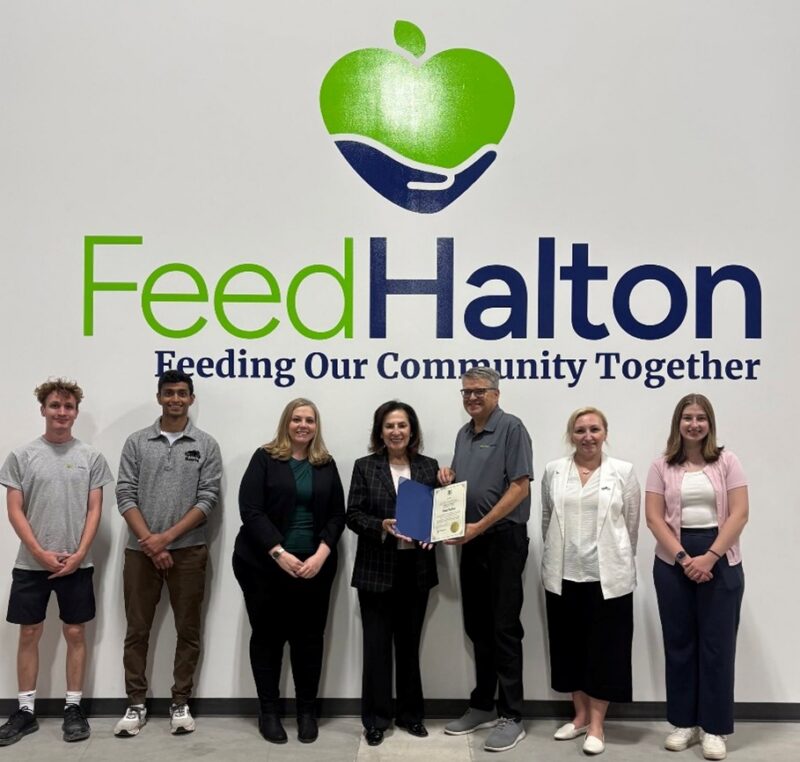
Kate pictured with MPP Effie Triantafilopoulos on a visit to FeedHalton.
Why this matters
Groups that are the most vulnerable to poverty and food insecurity frequently face the greatest barriers to accessing nutritious food and support. This includes low-income households, single-parent families, people with disabilities, racialized groups, and those in northern or remote communities. As a result, they face food insecurity at disproportionately higher rates.
Food insecurity is linked to poorer physical and mental health outcomes. Research shows that there is an increased risk of chronic diseases such as diabetes and heart disease in those experiencing food insecurity. People living with food insecurity are also 3 times more likely to have depression and 2.5 times more likely to experience anxiety than people who are food secure.
My education has taught me how important nutrition is for health. At FeedHalton, I learned that healthy eating is only possible when people can regularly access nutritious foods. Nutrition care should reflect a person’s unique situation. We need to consider the impact that income, social supports, education, and living conditions have on someone’s ability to access, purchase, and prepare food. FeedHalton has shown me that nutrition is more than just education and counselling. It also means understanding and supporting food systems that make healthy food more accessible for everyone.
My reflection and looking ahead
Working at FeedHalton has shown me that nutrition is about much more than healthy eating advice. I now understand that nutrition involves helping people access nutritious food and supporting the policies and systems that make healthy choices possible for everyone. When I finish my Master of Applied Nutrition in 2027, I hope to be a dietitian who plays an active role in making those healthy choices available, affordable, and accessible to all.
About the author
Kate Williams is the Marketing and Fundraising Coordinator at FeedHalton. She is pursuing a Master of Applied Nutrition at the University of Guelph this fall. Kate is also the Senior Co-Chair for the Dietitians of Canada Student Network. As an aspiring Registered Dietitian, she is passionate about food, nutrition and food security.