
When food bank visits increased over the last year, so did our response. Over 1 million people turned to food banks for help, but we made sure food banks could keep their shelves stocked to meet the rising need in their communities.
We delivered over 25 million pounds of food to food banks across the province, providing essentials like pantry staples, produce, beef, chicken, eggs, milk, pork, and turkey to people and families facing hunger.
As more people struggle to get by throughout Ontario, we’ve been working hard to find new ways to increase access to the fresh, healthy food for those who need it most.
Our partnership with Leamington Food Hub
Our partnership with Leamington Food Hub is just one example of how we’ve created innovative solutions to deliver more food than ever before and provide locally grown produce to communities across Ontario. The partnership has allowed us to deliver a total of 3.2 million pounds of fresh produce, like tomatoes, cucumbers, and peppers, in the last year.
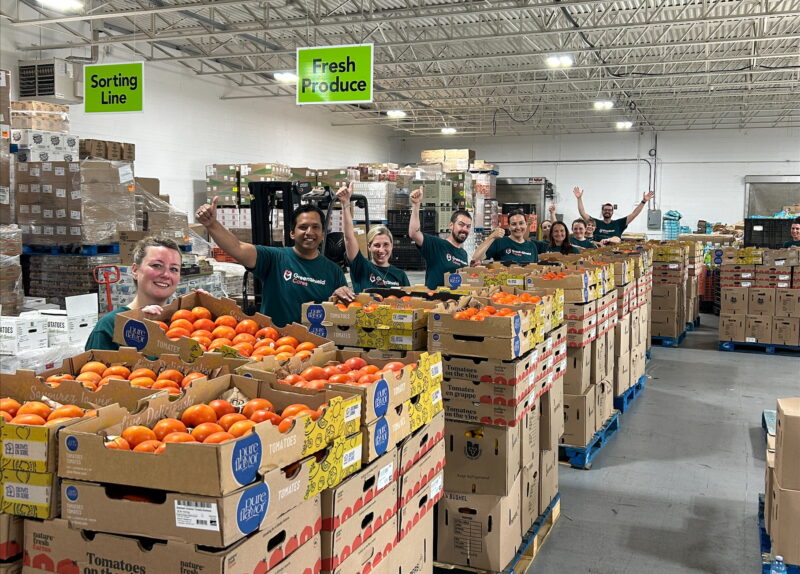
Volunteers at Leamington Food Hub sorting produce as a part of our Mixed Pallet Program.
To help food banks distribute these donations more efficiently, we created a mixed pallet program to provide food banks in our network with smaller, shareable quantities of produce. This makes it easier for food banks of any size and capacity to receive shipments of food, reduces spoilage, and allows them to provide a greater variety of healthy options to people and families in need.
This collaboration has been supported by over 30 farms in the Windsor-Essex region, and has allowed us to deliver fresh produce to more than 30 communities, including to Northern Ontario, rural food banks, and members of the Ontario Federation of Indigenous Friendship Centres.
Our Farm to Food Program
In addition to sharing produce, our Farm to Food Program also maximizes the impact of every donation.
Produce that is not suitable for inclusion in food deliveries is transformed into healthy prepared meals, such as soup, at UHC Hub of Opportunity’s state-of-the-art kitchen facilities, and is then frozen and distributed to those in need across the province. This approach reduces food waste and increases the amount of ready-to share food available to communities.
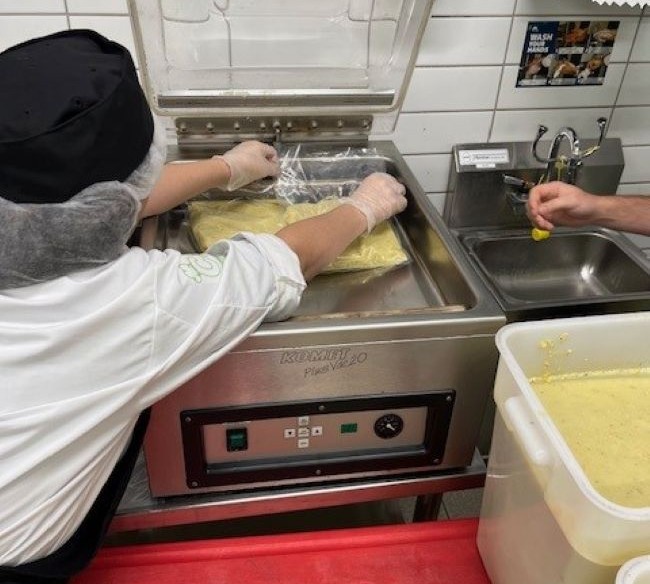
Soup prepared through our Farm to Food Program being vacuum sealed before being shared with food banks across Ontario.
The program also creates local employment and training opportunities. Culinary apprentices working toward their Red Seal certification are able to gain hours of experience through supporting the program, and high school students can earn co-op credits and learn about what it’s like to work in a professional kitchen.
In September, we visited these facilities with our partner, Ontario Power Generation, whose support helps make this program possible. Together, we saw firsthand how collaboration can increase access to healthy food, strengthen local communities, and create solutions that leave a lasting impact.

The Feed Ontario team with representatives of OPG and UHC – Hub of Opportunities.
Why it matters
As more people need to turn to food banks to get by, partnerships like these are more important than ever. The collaborative efforts that make our work with Leamington Food Hub and our Farm to Food program possible show the incredible difference that can be made when communities come together. The generosity and commitment of our partners allows us to make fresh, healthy food more accessible to those in need, all while making sure less food goes to waste and increasing employment opportunities in the province.
To learn more about our work to end hunger and how we’re working together with our partners to expand programs across Ontario read our latest Impact Report, and stay up to date with our progress by signing up for our newsletter.